
Smellscapes: A Reading List on the Intersection of Scent, Culture, and Climate
Picture a city. Now picture yourself walking around that city’s downtown on a high summer afternoon. What does it smell like?
Perhaps you imagine the pleasant fragrance of the decorative flowers on the sidewalk, or the aroma of brewing coffee spilling out of a corner coffee shop. Maybe it’s the fleeting scent of a stranger’s perfume that makes you turn your head as you pass them by, but maybe you don’t notice the smells at all. They’re all too familiar to you.
I used to live in a city that, in recent years, started to smell like it was built on top of a landfill. Whenever the temperature rose above 30 degrees Celsius (which has become increasingly common year by year), huge clouds of odor molecules settled over the city, bringing with them a smell which made it seem like a garbage truck was always just around the corner.
The blossoming basswood in front of my apartment complex was powerless in covering the foul odor making its way to my window. I first looked around my apartment to identify the source of the smell. I sniffed the trash can, the leftover food on the stove, and every item I had in the pantry, but I couldn’t point out what was making my nose wrinkle.
It wasn’t until I sat down to look at my phone that I realized that the source of the noxious smell was not my apartment, but the city itself. My social media feed was filled with memes mocking the city’s new “brand” and the “olfactory experience” it offers as one of the fastest-growing cities in the country.
Some people believed that the smell came from the dump site located some 10 kilometers from the city (perhaps as a grotesque reminder of the city’s inability to manage waste properly), while authorities claimed that it was the smell of an eco-fertilizer farmers used in a nearby village.
Ironically, now I live in the Austrian countryside, where dairy farmers rely on permanent grassland to feed their livestock. Farmers typically fertilize the grass after each cut. To me, it seems like this happens at least once a month, which means that on most weeks, the entire area smells like cow manure.
But this smell feels more natural in a setting where green pastures and meadows dominate the landscape, with cows grazing on the grass. This smell reminds me of my childhood summers that I used to spend at my grandparents’ place in the Romanian countryside, far from factories and big roads carrying traffic.
These experiences made me reflect on how something as intangible and as fleeting as smell can be so integral to our worlds. Scents can spark a cultural moment, help us rediscover forgotten memories, or even make us more aware of the climate changing around us. This reading list is a reflection on these ideas, with each piece highlighting just how much olfactory experiences shape our identities, culture, and understanding of a climate in flux.
Learning About Cities By Mapping Their Smells (Vittoria Traverso, Atlas Obscura, December 2017)
Cities are olfactory landscapes in flux, constantly influenced by environmental conditions, the daily routines of their people, and the predominant industries driving their economies. By keeping track of a city’s smell, we can record its history and get insights into the cultural and social changes it went through over time.
In this article, Vittoria Traverso explores how British artist and researcher Kate McLean made it her personal project to map cities around the world by their smells. McLean started off by first recording the scents of the Scottish capital, Edinburgh, and she went on to create “smellmaps” of cities around the world, including Amsterdam, New York, and Singapore.
She worked with local volunteers who went on “smellwalks” to identify the scents of cities. Volunteers were generally surprised by how many different smells they could notice, and there was often a “mismatch between expectation and reality.”
For example, people expected cannabis to be the dominant smell in Amsterdam. However, instead, some of the most noticeable odors came from waffles and pickled herring — two delicacies that have a long history in the Dutch capital.
However, the point of the smellwalks is not to pin down the exact scent of a place, but to synthesize different perceptions. Usually, no two people standing next to each other smell the exact same scent. What we smell is filtered through our own social and cultural experiences, which determine how pleasant or familiar a scent is to us.
But McLean is also interested in finding a common ground and understanding what memories or emotions a scent might bring up in a particular context. She collects these experiences and turns them into entrancing visualizations made up of “colored spots and concentric lines that look like galaxies.”
“During a smellwalk in Brooklyn, one of her participants reported the “smell of shattered dreams.” McLean asked each person in the group what that meant and eventually a consensus was reached. “We agreed that the ‘smell of shattered dreams’ is the smell of walking out of a bar, with that typical stench of beer and cigarettes, and going home alone again.”
The Case for Smelling More (Riley Black, Atmos, May 2024)
While recording what cities smell like can give us a glimpse into our collective history, scents are also an archive of ourselves. Smells capture our memories and reveal our values, what we like, and what we’re repulsed by.
Yet too often we neglect our sense of smell. In this article, Riley Black argues that we made a habit of creating our own smellscapes to mask the naturally occurring scents of our environment. We do this by using deodorants, air fresheners, or scented dog poop bags. Admittedly, I used to get the lavender-scented sand for my cat’s litter box as well in an attempt to cover up its smell.
“Often, we only sniff when we feel there’s a guarantee of something pleasant—like a fresh grapefruit or the sugary scent of a kitten—and do all we can to avoid the noxious.“
Black makes a case for smelling more. Whether it’s the spices in the pantry or the trees on the city sidewalks, we shouldn’t neglect what our noses can detect. Taking a brief moment to take in smells consciously can add a whole new dimension to our everyday lives.
Smelling more can have a grounding effect, but it’s also a challenge. We barely have words for specific scents, therefore, it’s a constant game of trying to guess what something “smells like.” Untangling new smells can feel like a puzzle, while familiar ones can easily trigger even half-memories.
Black caught me off guard by writing that freshly-sliced oranges remind her of childhood soccer games — that she has a distinctive experience with a smell that’s embedded into our (mostly western) collective consciousness as one of the olfactory signifiers of the winter holidays. Oranges make me think of Christmas even in the summer heat.
We filter smells through our cultural baggage, but smells also hold our personal stories. They help us get to know ourselves better, whether by revealing parts of ourselves or by making us examine our values, experiences, and biases. Knowing what smells we’re drawn to can reveal as much about us as our favorite music or how we like to be touched, Black writes.
“So, as much as you are comfortable, I encourage you to intentionally smell more around you and see what sparks in your mind. Perhaps there are half-forgotten memories there, or new discoveries about what you’re fond of. Maybe what might initially seem unpleasant was actually just unfamiliar, and, as I’ve increasingly found, smells that we try to so thoroughly cover up might be hiding parts of ourselves that are as much a part of who we are as the topography of our face.”
The Smell of Dawn (Nina MacLaughlin, The Paris Review, November 2017)
This essay by Nina MacLaughlin is part of a five-part series exploring dawn by the senses. Her meditations on smell show just how much our daily routines and the images associated with them shape our olfactory landscapes.
She draws inspiration from Charlie Stackhouse and Andrew Cinnamon, founders of the creative agency Cinnamon Projects, who spent a year collecting images, drawings, and photographs, based on which they designed a series of scents, perfumes, and incense “chaptered by the hour.”
To Stackhouse and Cinnamon, 11 P.M. smells like amber, clove, carnation and patchouli, which evoke a sense of depth and mystery. Meanwhile, 7 A.M — the closest to dawn from their series — smells like black tea, clay, driftwood, and marigold, which are reminiscent of the meditative states mornings can bring.
MacLaughlin contemplates: What would dawn smell like? What would those seven, or eleven minutes, smell like if we could capture them? Just like Stackhouse and Cinnamon, she chose some images and let herself be guided by the composition, the associations, and the emotions they brought up in her.
The first image she describes is a painting by Odd Nerdrum called Return of the Sun. The painting makes her think of “tan, peach, and purple colors,” and there’s “something warm, eager, ready, embracing here.” The smells this painting evokes in her include “kneaded bread, yeast, peach pit, burnt sugar, the brothy smell of sleep and flannel.”
The next two pictures MacLaughlin describes, which are Come Away from Her by Kiki Smith and Hayhook by Sally Man, make it clear that to her the smell of dawn “exists in the past and the future,” it’s what comes right before and right after those brief minutes we call dawn. Therefore, the smell of dawn to her is nothing but “anticipation.”
“Smell makes of us time travelers.
We travel back. We travel forward. Smell is the most anticipatory sense. One smells the coffee on the counter before one takes the mug to the mouth. One smells the rotting mouse below the fridge before one sees it. One smells rain on warm pavement before one feels the drops. We’re blasted with pheromonal force before we know what it is we’re registering. And dawn, likewise, is the most anticipatory moment. Is it happening? Did I miss it?”
Climate Change is Destroying What You Smell (Maggie Downs, McSweeney’s Internet Tendency, April 2024)
Air pollution and climate change are closely linked. And while most of us are used to our cities having a faint smell of car exhaust and factory fumes, we are less aware of how this process is altering familiar smells or making them disappear altogether.
In this short essay, Maggie Downs reflects on the scents that we might be losing in our ever-changing world, tries to capture the “fragrance of a climate in flux,” and quietly mourns the smells that are long gone.
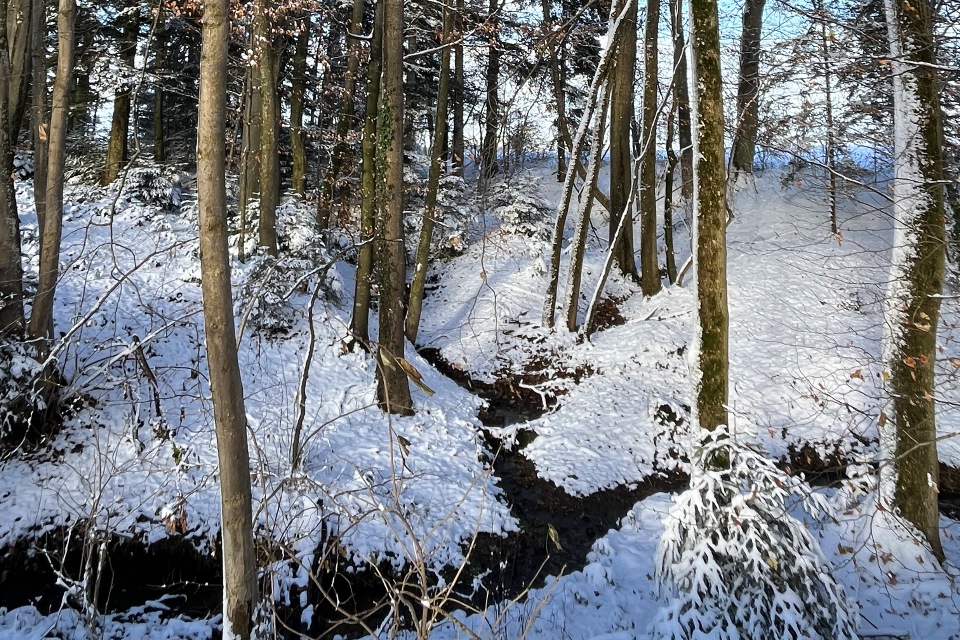
For example, climate change is altering the way snow smells. More specifically, climate change is making snow smell stronger as the atmosphere and land get warmer. A warmer environment makes smells more intense and more noticeable. Snow absorbs whatever is in the air. Therefore, if you live in a city, chances are that snow for you smells more and more like “rubber and exhaust.”
But it’s not just the smell of snow, Downs says. Extreme weather fluctuations, from drought to excessive rainfall, are also endangering many familiar fragrances. For instance, Australian sandalwood is now at risk of extinction in the wild due to drought and unsustainable harvesting.
This echoes a wider trend happening across the globe. From soybeans to cocoa crops and vanilla-producing orchids, extreme weather conditions endanger multiple familiar scents. Can you imagine a world without the smell of real vanilla?
“The disappearance of scent is a quiet kind of loss, not as easily recognizable as the broken heart of a downed forest or a churning island of garbage in the ocean. But it’s happening. With the disappearance of biodiversity, cultural heritage, and cherished landscapes, we’re also losing the aromas associated with them.
It’s the kind of ending recognized in retrospect—like when I look at my almost ten-year-old son and realize one day I put him down and never carried him in my arms again. It evokes a specific kind of longing in me that I can’t quite name.”
These Scents Were Once Erased by Humans. Now They’re Back. (Victoria Malloy, Atmos, May 2025)
And perhaps Maggie Downs is rightly mourning this quiet loss of scents, as nearly 600 plant species went extinct over the past 250 years, which happened due to drought, deforestation, and other human activities. With many of these extinctions, we lost scents that no human living today has ever smelled.
But thanks to biotechnology, scientists and perfumers are bringing some of these long-lost aromas back. By doing this, their goal is to help us reconnect with the past long gone, while confronting us with our losses. “This is a new kind of climate reckoning,” Victoria Malloy writes in this article.
Using Harvard University’s Herbarium — which contains over five million preserved botanical specimens, including plants such as extinct flowers and trees from over 150 years ago —biologists from Gingko Bioworks used DNA sequencing to deduce what some of the lost flowers could have smelled like.
Based on these, a perfume brand called Future Society created six fragrances that they refer to as “scent-surrections.” These perfumes brought back smells from trees that went extinct just recently in India’s western mountain range, and a relative of hibiscus that was last seen in Hawaii over a hundred years ago.
Biotech advancements, however, don’t just exist to mourn what we lost, but to help us redefine our relationship with nature, and remind us of what we might be able to still save. I hope that soon enough, when I pick up a rose, it won’t be to see whether it has a smell at all, but with the certainty that I am about to have one of the sweetest olfactory experiences.
“Reconstructed scents of extinct flowers are not just olfactory curiosities—they’re emotional bridges between what has been lost and what still might be saved,” said Del Punta. Because scent and emotion travel the same neural pathways, when the wearer first encounters the fragrance, armed with the knowledge that the flower is extinct, the scent takes on a new dimension. For some, it may stir a sense of awe or wonder at the possibility of reconnecting with something lost to time. For others, it might evoke reverence or even quiet grief. In a single breath, these fragrances make the invisible visible; the distant immediate.
“They can transform extinction from an abstract concept into an intimate, embodied experience where scent becomes more than a sensation—it becomes a story we carry,” said Del Punta. “These emotional encounters help us internalize the stakes of the climate crisis—not just intellectually, but viscerally. And that’s what inspires people to protect what is still here.”
You Are What You Smell: How Scent and Culture Are Intricately Linked (Geerdt Magiels, translated from Dutch by Kate Connelly, the low countries, July 2021)
Our ability to detect smells has been largely ignored and dismissed throughout history, with Charles Darwin calling it the most primitive system when it comes to humans. French philosopher Condillac considered that our ability to smell contributes nothing to “the cognitions of the human mind,” while Kant described smell as the “most dispensable” of the senses.
This is mostly because our sense of smell feels highly subjective compared to our other senses, like vision. How we interpret odors depends on personal experiences and cultural values, but the context of a smell can also influence its meaning.
For instance, back in the seventeenth century, for people living in the countryside, “a steaming, fragrant dunghill was a sign of wealth and fertility,” Geerdt Magiels, biologist and philosopher, writes in this essay. Today, this association is most likely gone, and the smell is contained either in the idyllic and remote countryside or the industrialized dairy farms.
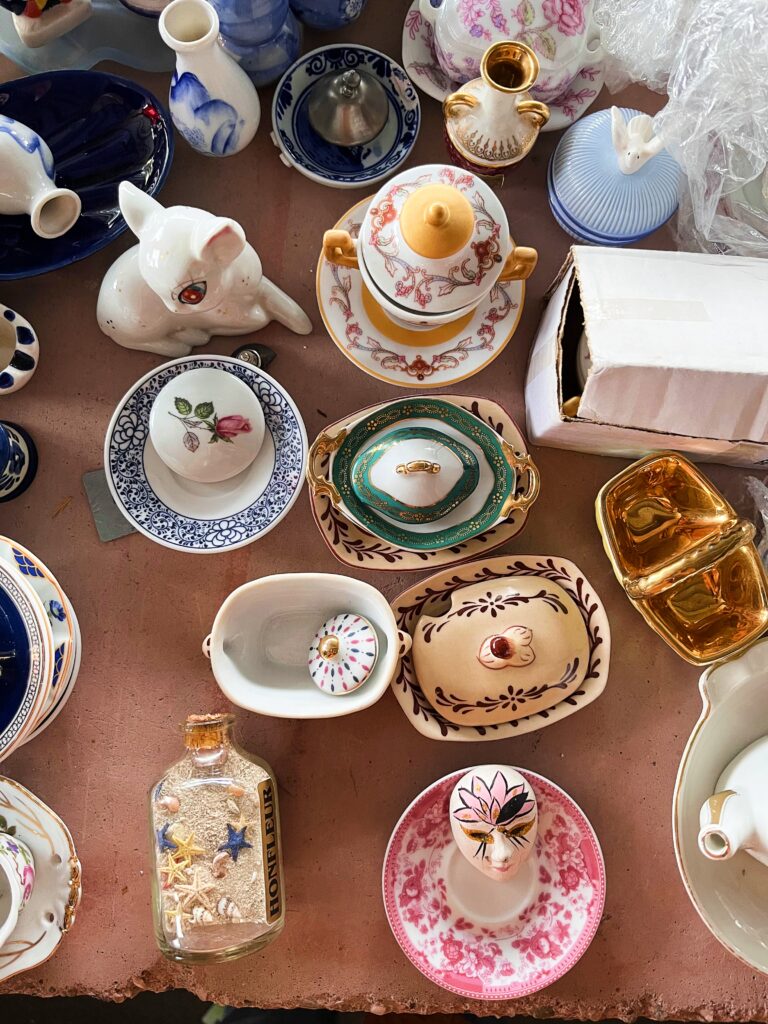
Magiels dives into how smells have shaped culture and society through the seventeenth century and reflects on today’s (mostly) deodorized world. He does this by taking us through art projects such as Fleeting – Scents in colour, an exhibition at the Mauritshuis in the Hague, which is infused with the smells of the seventeenth century. The creators of the exhibition looked through paintings, drawings, and objects from the era to reconstruct what it might’ve smelled like and set up “smelling stations” to help visitors connect with the past through a multi-sensory experience.
Odeuropa, Magiels mentions, is another project concerned with mapping the scents of the past. The 2.8-million-euro project gives insights into the smell history and heritage of Europe between 1600 and 1920. Art historians, linguists, scent makers and experts in artificial intelligence worked together to go through four centuries worth of digitized texts across seven languages to uncover the dominant scents of the past.
For example, you can look up how brothels smelled like throughout the centuries, or how the smell of tobacco went from being just “filthy” and “stinking” in the 1600s to being “aromatic” and “fragrant” in the 1900s.
“Our fragrance environment is a cultural landscape that evolves along with fashions, styles and standards and helps determine who we are. In short: scent is an irrevocable part of the human story and is beginning to receive the attention it deserves. When Andy Warhol wished, in 1975, for “some kind of smell museum, so certain smells wouldn’t get lost forever” his desire went unfulfilled. Today, the exhibition at the Mauritshuis is just one of the many (museum) initiatives that are teaching us to newly value our sense of smell.”

Evelyn Jozsa
Evelyn Jozsa is a writer, journalist, and editor with eight years of experience in creating high-quality articles, including PR stories, blog posts, and copy for various marketing channels. Her interest in creative writing includes short stories, essays, and reviews. She has an academic background in Journalism and Irish Studies.

